Digital Platform Labor Rights: Mensakas, the Courier-Owned Platform Cooperative in Barcelona.
18 March 2020

2019 was a year of explosive growth for food delivery services in Taiwan. Foodpanda’s order volume alone surged 25-fold. Like magic, a few taps on a screen bring a variety of food right to your doorstep. This has become daily life for urban dwellers worldwide, including those in Taiwan. While the development of the Internet of Things (IoT) is still ongoing, it has already fundamentally reshaped our consumption habits and even the livelihoods of many.
2019 was not only the year the delivery market exploded but also the year two couriers tragically lost their lives while rushing to fulfill orders. According to estimates from Taiwan’s Ministry of Labor, there are approximately 80,000 delivery couriers in Taiwan, with 50,000 registered under Foodpanda and UberEats alone. Last October, three major traffic accidents—some fatal—involving couriers occurred within four days, thrusting the issue of the “employer-employee relationship” into the spotlight. The Ministry of Labor subsequently ruled that the relationship between couriers and delivery companies is one of employment, requiring companies to provide labor insurance and vocational training. Simultaneously, Foodpanda began reducing delivery bonuses every half-month, sparking several strikes by couriers across Taiwan.
In fact, the predatory strategies of the platform economy, often marketed as “sharing” or “win-win” scenarios, are a global phenomenon not unique to Taiwan. Consequently, collective movements to fight for gig workers’ rights have been underway worldwide for some time.
The Platform Economy is Global; So is the Fight for Labor Rights
It was a demoralizing night in Barcelona. Torrential rain made riding dangerous. Txiki Blasi, a soaked delivery courier, watched his app continue to ping with orders. Yet, this “digital boss” offered no instructions or warnings. They didn’t say, “It’s dangerous; we must stop working.” They did nothing.
The next morning, Txiki and Núria Soto, who lived in the same district, checked in on each other and decided they needed to take action. They exchanged contact information, and one by one, couriers began connecting through WhatsApp and Telegram groups. Worker solidarity began with these simple exchanges.
At the time, even those most deeply involved could not have predicted that their passion for cycling and street life, combined with digital platforms and the “cooperative economy,” would lead them to found Mensakas—a worker-owned delivery platform cooperative—three years later.
Who Owns the World?
In 2019, scholars, activists, workers, designers, and engineers involved in global “platform cooperativism” (platform coop) since 2015 gathered at The New School in New York. The theme of that year’s conference was “Who Owns the World?”
Historically, “rent-seekers” were individuals or companies that extracted wealth from the use of vital resources like land, energy, or water. Today, a new form of rent-seeking has seized a resource that promises the largest and fastest accumulation of wealth in history: data. With the advent of smartphones and mobile networks, the internet has become the new commercial battlefield, where algorithms driven by data serve as the new “bosses” for platform workers.
Initiator Trebor Scholz noted in his opening remarks that this alliance now functions like a community-building hub. By collaborating with academic institutions, they are building a shared platform to identify the common needs of this ecosystem. Through policy groups, they advise governments. They have also established the Institute for the Cooperative Digital Economy (ICDE), offering online courses on scaling, fundraising, and blockchain, making these resources accessible to workers worldwide.
Among the participants in the conference were teams like CoopCycle from France, as well as delivery workers from the UK and Thailand, all seeking solutions to the current crisis. Barcelona’s Mensakas was one of the featured teams. Members like Oriol Alfambra, Txiki Blasi, and Núria Soto had all previously worked as couriers for Deliveroo.
Txiki’s eyes light up when he talks about street life and cycling. “But this is also why these platforms are called ‘innovative,’” he says. “They enter local markets as digital platforms, offering ‘self-employment,’ but they establish precarious systems that fundamentally change the nature of work for those who serve them.”
{%youtube 1ENlgOF5X9Y %}
Delivery platforms create an environment where taking orders feels like a game or a gamble. By bypassing traditional employment structures, they force workers to bear all the risks. They design systems for mutual reporting, turning workers into competitors, and lure them in with high bonuses only to gradually slash rewards—a global playbook for platform capitalism.
“The company began to control us. We started with zero knowledge of labor rights, but after studying and learning, we realized we must be recognized as employees. We need insurance for accidents to protect ourselves. Under the previous situation, if you broke a leg tomorrow, the company would simply say: ‘Great, since you’re self-employed, goodbye.’”
Riders x Rights: Fighting for Their Own Sovereignty
Barcelona’s unique political DNA, shaped by a history of resistance and autonomy, provided the backdrop for this movement. Modern Barcelona still sees many riots and protests, such as those regarding future policy directions, voting rights, and the status of Catalonia within Spain—reminiscent of the power struggles seen in Game of Thrones. This struggle continues today, with people imprisoned for organizing referendums or prosecuted as terrorists simply for defending polling stations.
Another slide in the presentation showed a photo of Barcelona from approximately 80 years ago.
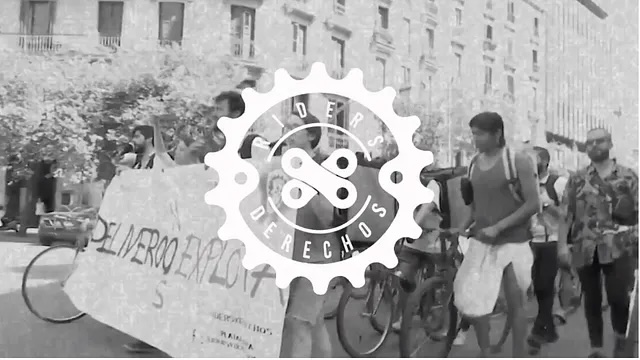 Video: Workers dismissed by Deliveroo formed their own cooperative (LABOURNET TV)
The 1936 Spanish Revolution took place in Barcelona. Factory owners and bosses fled to the fascist side, leaving workers in control. The workers converted factories into production lines for weapons to fight fascism. This is the starting point and the spiritual home of the collaborative platform.
In Spain, being self-employed requires paying high taxes that increase annually. Txiki and Núria, living in the same neighborhood, started with worker chat groups, eventually forming the “Riders x Rights” platform. When they first sought help from unions, the organizations weren’t sure how to categorize them, eventually finding a home with the iAC (Intersindical Alternativa de Catalunya).
“They helped us create a group and began collaborating with us,” Oriol explains as he began managing union cooperation and drafting demands. “We started asking colleagues one-on-one for their thoughts to see if they agreed with these demands to push the company for change. We knew that to achieve this, strikes were necessary. Solidarity is the only way to win, but striking is risky—you might not get paid, or you might lose your job.”
They knew some would avoid such risks, so unity was paramount. When the group sent their letter of demands to Deliveroo, the company offered no formal response, stating: “Since you are self-employed, there is no employer-employee relationship.”
A Victory for Delivery Workers
In 2018, a Barcelona court ruled in favor of the couriers in a collective lawsuit against Deliveroo. The court declared the dismissals invalid; the company was forced to reinstate the workers and pay their monthly wages, although they refused to let them actually work.
“We formally filed the lawsuit against Deliveroo in 2016. Some workers were too afraid to join for fear of losing their jobs. After two years of legal proceedings, we won.”
Txiki says: “Part of the success was luck in having a good judge who understood the problems workers faced. The union also provided immense support, including our demands in the proceedings and arguing that the company must hire us as formal employees.”
“But the company didn’t want that, because hiring us requires a contract, even though they claimed we were self-employed. So the company said, ‘We will pay you, but you won’t work.’ Currently, they must pay us €400 a month. In a way, you could say Deliveroo paid for our flights to this conference. They are paying us wages as formal employees; they have to acknowledge we are part of the company.”
The Birth and Growth of Mensakas — A Sustainable and Democratic Business Model
The name “Mensakas” is actually Spanish slang for courier or messenger.
After the strike, the riders got to know each other, and Txiki, Núria, and Oriol decided to become founders. “We had no business experience; we were just workers. But we did our best, dividing into departments to develop the app. We had to self-organize, handle public relations, and plan. We raised €6,000 through crowdfunding as starting capital, then developed the name, branding, and business strategy to build the digital platform.”
They admit the process was one of learning from mistakes, aided by many supporters. They realized that staying open was crucial. “Managing public-interest finances is hard, and making money is hard. We started hiring and slowly learned how to run a team. Our initial funds were running out quickly, so we navigated the ‘how-to’ while operating departments and managing human relationships.”
Mensakas aims not only to be a worker-led platform but also to design fairer mechanisms, such as paying women 5% more to bridge the wage gap and optimizing routes to reduce the carbon footprint. Currently, Mensakas has 18 partners. Recently, they applied for the Barcelona City Council’s startup support program to officially launch their revamped app.
The Battle for the Future
For Núria, Mensakas is now like a family—a solution against the digital platform economy. They fight for the union and for their own organization; solidarity is everything. It is also about others facing the same issues.
Txiki hopes Mensakas becomes strong enough to be competitive in the market, helping others and becoming a key player. “The digital economy will continue to reach everywhere, entering every country to change laws, systems, and destroy what we have. A healthy public system relies on large companies paying taxes, but international firms like Deliveroo and Uber bypass this, undermining the working class. We have entered a high-tech world where we risk becoming ‘digital slaves’ because no one cares what happens to you.”
“Platform cooperativism allows participants from all over the world to become a family, realizing we are not alone. Together we grow stronger, and together we can fight them.”
References:
- Ministry of Labor Food Platform Courier Rights Protection Zone.
- Mensakas App Crowdfunding
- Núria Soto: “Deliveroo has no interest in talking about hiring us”
- Worker-Owned Apps Are Trying to Fix the Gig Economy’s Exploitation
- READr: “Journalist as a Courier: Unboxing the Secrets of Food Delivery!”
- “The Reminiscent Times Guest House” Episode 245: Does Labor Rights Hinder Innovation? How to Resolve Delivery Labor Disputes?
Originally published at https://www.thenewslens.com on March 18, 2020.
數位平台勞動權:巴賽隆納外送員自組平台合作社Mensakas
2019年是台灣外送服務成長爆發的一年,光是 Foodpanda訂單量就成長了25倍 ,就像是魔法一樣,對著螢幕用手點幾下,各式各樣的食物就會自動送到你眼前,現今已經是全球城市以至台灣人的日常,物聯網的發展還在進程,卻已經全然改變了我們的生活消費習慣,甚至許多人的維生模式。
2019年不僅是外送市場爆發的一年,也是兩位外送員為搶快錢意外身亡的一年。根據勞動部估算,目前國內約有八萬名外送員,單登記在Foodpanda及UberEats旗下者就有五萬人。去年十月,四天內三起外送員的交通重傷甚至致死事件,讓外送平台與外送員的僱傭關係議題成為焦點,勞動部隨即大動作裁決外送員與食物外送公司間為僱傭關係,必須提供員工保險、職前訓練等。無獨有偶,目前市佔率最高的Foodpanda,開始每半月調降外送獎金,引起全台各地外送員發起多次罷工。
事實上,號稱「共享」、「雙贏」的平台經濟在全球部署的掠奪策略並不單只發生在台灣,而群起團結爭取零工權益的運動也已經展開多時。
平台經濟是全球的,勞工捍衛自己勞動權益也是全球的
那是一個令人沮喪的夜晚,巴塞隆納下著暴雨,光是騎車都很危險,全身淋濕的食物外送員提奇·布拉西(Txiki Blasi)盯著手機上外送服務的應用程式仍然跳出一個個訂單,卻不見這個「數位老闆」對眼前的情況給出一點指示,它們沒說:「這很危險,我們必須停止工作」,它們什麼也沒做。
隔天早上,住在同一區的提奇與努莉雅·索托(Núria Soto) 問候對方昨天的情況,想著應該做點什麼,所以他們留下對方的聯絡方式,一個接著一個,外送員們以WhatsApp和Telegram創立群組開始建立聯繫管道,你一句我一句,工人們連結就從這裡開始。
堅持到最後、參與最深的那群人當時也預料不到,從熱愛騎單車所創造的街道生活出發,結合「數位平台」與「合作經濟」,三年之後他們能自己創立〈 Mensakas 〉這個勞工自主的外送平台合作社。
這個世界的擁有者,是誰?
2019年,紐約新學校聚集了自2015年以來全球投入平台合作主義(platform coop)的學者、行動者、勞工、設計師、工程師,這年平台合作主義大會主題是「誰擁有這個世界」(Who Owns the World?)。
歷史上,尋租者是從土地,能源或水等重要資源的使用中獲取財富的個人或公司。如今,一種新的尋租主義形式已經佔領了一種資源,該資源有望實現歷史上最大最快的財富積累:數據。隨著手機與行動網絡問世,網絡早已成了新一輪的商業戰地,透過數據運作的演算法則成為平台勞工的新老闆。
發起者休茲(Trebor Scholz) 在開場的分享中提到,現在這個聯盟就像一個社區建設中心,透過與不同的學術單位合作,建立出一個共享平台,找到這個生態圈的共同需求。透過政策小組,向政府提出建議。成立合作數位經濟研究所,開設線上課程,預計發佈區塊鏈,開發如何擴大規模、如何籌措資金等課程,讓全世界相關領域的從業人員都能使用。
會議中關心外送員權益的,有來自法國的 Coop Cycle 團隊,也有來自英國與泰國的外送工人,聚集於此互相交換心得,尋求解決現況的方法。巴塞隆納的Mensakas是其中一組參與年會的團隊,奧里爾·阿爾法布拉(Oriol Alfambra)過去在唸書時曾經是個服務生。提奇·布拉西(Txiki Blasi)在讀戲劇、也做過廚師等等的打工,努莉雅·索托(Núria Soto)在研讀新聞媒體,他們都曾經是戶戶送(Deliveroo)的食物外送員。
提奇說自己讀書的時候喜歡騎車,講到由人們所組成的街道生活,他的眼睛閃閃發光,「但這也是平台之所以被稱為創新的原因,我們開始為國際公司工作,他們到了在地以數位平台的形式,開始提供自僱者工作,並且他們開始出現在市場上,建立不穩定(precarious)的系統,改變了為他們工作的人。」
外送平台公司營造情境,讓接案外送像是一場遊戲或賭博。規避僱傭制讓受雇者自擔風險,並設計相互檢舉的制度,讓工人彼此成為競爭對象,同時以高額獎金吸引勞工加入,再逐步降低獎金與優惠,這些手段已經是平台資本主義的全球套路。
「公司開始控制我們,我們從完全不懂任何關於勞工權益的東西,開始研究並學習後,了解到我們必須是這間公司的勞工,出意外的時候需要有保險,以保護自己的權益,依照之前的情況,如果明天你不幸摔斷一條腿,公司只會對你說:『很好,因為你是自雇者,再見。』」
自己的權利自己爭:Riders x Rights
與台、港似曾相似的歷史背景,造就了巴塞隆納獨特的政治基因。近代的巴塞隆納仍存在著許多暴動與抗爭,例如爭取政策未來的走向以及爭取投票權的抗議活動,還有關於加泰隆尼亞地區是否歸屬於西班牙政府,因為在早期,西班牙還有國王,就跟「冰與火之歌」裡面演的一樣。而這個抗爭目前仍在持續。人們因為發起公投而被抓去坐牢,還有人被當作恐怖份子而遭到起訴,即便他們只是在捍衛公投的投票所而已。
投影片上的另一張照片秀出了大約80年前的巴塞隆納。
影片:外送公司戶戶送解僱的工人組成了自己的合作社(LABOURNET TV)
1936年的西班牙革命就發生在巴塞隆納,所有的工廠主人和大老闆都離開了巴塞隆納,去投靠法西斯主義的那側,工人們於是獲得工廠的掌控權,將工廠改裝成製造武器的生產線,並用製造的武器來打擊法西斯主義。所以這就是我們的起點,也是我們創辦協作平台的發源地。
在西班牙作為一個自雇者,必須要付出高額的稅金,而且這個稅金還在不斷逐年增加。提奇與努莉雅住在同一區,從工人間的群組開始,創了一個又一個群,留到最後最後的那群人,組織形成了「Riders x Rights」平台。當這群爭取主權的外送工人剛開始尋求工會協助時,工會並不知道要將他們安置到哪個分類,最後找到了加泰隆尼亞跨行業另類職業工會(iAC,Intersindical Alternativa de Catalunya)。
「他們幫我們創建了一個群組,並開始跟他們合作。」奧里爾開始處理工會組織的合作,並開始寫下一些訴求,「我們開始對同事們一對一的詢問他們的想法,看他們是否同意這些訴求,去要求公司爭取改變,我們知道如果想要達成這些訴求,勢必需要去罷工抗議,工人團結才有勝算,罷工是有風險的,首先你可能會拿不到薪水,第二你可能會失去工作。」
他們知道有些人會避免去做這些事,所以那非常重要,就是要團結起來,當這群人把訴求信寄給Deliveroo之後,公司並沒有對此正式作出回應,理由是:「因為你們是自雇者,所以你們跟公司之間並沒有勞雇關係」。
外送勞工的勝訴
2018年,巴塞隆納法院判出決議,這群外送工人贏了與外送公司Deliveroo的集體裁決 — 公司當初的惡意解雇無效,他們不得不重新接納這些工人,支付他們每月的工資,但拒絕他們繼續工作。
「2016年我們正式提起針對Deliveroo解雇我們的訴訟,有些工人不敢加入,因為他們也怕失去工作,經過兩年的審理程序後,我們贏了這場訴訟。」
提奇說:「這場訴訟能有好的結果,一部分在於我們很幸運遇到好法官,他非常清楚工人在這個狀況下所遭遇的問題,工會在背後也提供了諸多協助,他們把這些我們所提出的訴求放到審理過程中,並且表明公司需要僱用我們成為正式員工。」
「但公司並不想,因為公司認為如果要雇用我們就要透過合約,但事實上他們又說我們是自僱者。所以公司說,我們會付給你薪水,但你們不要工作。現在他們每個月必須支付400歐元的薪水,這就是我們現在的情況。某種情況下你可以說Deliveroo幫我們出了來這裡開會的機票錢,他們付給我們像在正式雇員的薪水,他們必須承認我們就是公司的員工。」
Mensakas的誕生與成長 — 永續與民主的商業模式
Mensakas這個名字其實是西班牙工作(career)的俚語。
在罷工之後,這些車手之間開始互相認識,而提奇、努莉雅、奧里爾等人決定當發起人,「我們對商業運作沒有經驗,我們只是勞工,但盡力去做我們可以做的事情,盡可能有效率分各個不同的部門,用來開發APP,很快就進入了市場,我們必須自我組織,開始做一些公眾工作並制定計畫,透過 群眾招募 得到6000歐元作為開始的基金,接著我們發展出命名、品牌,商業策略等等,建立了數位的平台。」
他們坦言過程都是在錯誤中學習,還好這一路上受到了許多人的幫助,最後了解,盡量保持開放性是很重要的,「處理具有公益的財務很困難,要賺錢也很困難,我們開始僱用一些人,並在過程中慢慢了解如何運轉團隊,但剛開始的基金很快就要用完,我們就在『到底要怎麼做』的過程中慢慢完成這些工作,過程需要去組織、去運作部門、處理人與人的關係。」
Mensakas不只希望建立勞工自主的合作平台,同時設計許多有益於更公平的機制,包含多付女性5%來彌補工資差距,透過重新部署運送路線,來確保碳足跡的降低等,現在Mensakas共有18個工作夥伴,近期他們也申請巴塞隆納市議會對新創企業的支持計畫,將研發的應用程式正式上線。
對未來的戰役
對於努莉雅來說,現在Mensakas像是一個家庭,一個對抗數位平台經濟的解決方式,他們為了工會而戰,也為了自己的組織而做,能夠團結很重要。其他與我們面對相同問題的人們也很重要。
提奇希望Mensakas可以強大到在市場上具有競爭性,能夠幫助彼此,並且成為現況的一個參與者。「因為數位經濟他們會繼續把手放到各個地方,他們進入每個國家,想要改變法律,改變系統,破壞我們現在所擁有的,健康的公共系統必須要靠大公司付出稅金才能夠正常運作,但這些國際公司像是Deliveroo、Uber把他們系統放入每個國家,並且破壞了原本的勞工階級,只有原本就有資金的公司能夠玩這樣的商業遊戲,能夠真的賺到錢,就像我們進入了一個很科技的世界,在此時我們狀況成為數位奴隸,因為根本沒人在意你變得怎麼樣。」
「平台合作主義讓來自世界各地的參與者可以變成一個家庭,了解到自己並不寂寞,我們一同變得越來越強壯,我們可以對抗他們。」
參考資料
- 勞動部食品平台外送員勞動權益保障專區
- Mensakas應用程式群募
- 努莉雅·索托(NúriaSoto):“ Deliveroo對於談論他必須僱用我們沒有興趣”
- Worker-Owned Apps Are Trying to Fix the Gig Economy’s Exploitation
- READr〈記者來當外送員:開箱美食外送秘辛!〉
- 《燦爛時光會客室》第245集:勞權妨礙創新?外送員勞資爭議如何解?